5 hr
Bob Marley Nine Mile Heritage Tour from Montego Bay
- Entry ticket
- Mobile voucher
- Valid same day
- Free cancellation
Nine Mile Jamaica — Bob Marley's Birthplace & Mausoleum
Where the reggae story begins, where the hills keep it.
Compare fares, pick the fit — all bookings are mobile-voucher and eligible for free cancellation where shown.
5 hr
5 hr
4 hr 30 min
Worth it for Marley and reggae fans
For 30 USD adult gate admission, nine mile jamaica delivers a guided walk through Bob Marley's birthplace, museum artifacts, mausoleum access, and impromptu live song renditions from Rasta guides who grew up on this hillside. Whether that fee pays off depends on who you are. Reggae devotees and Rastafarian-culture-curious travelers get the strongest value: the guides' storytelling and the mausoleum are the emotional core, and no ticket buys that atmosphere anywhere else. Casual visitors chasing a photo stop feel the pinch, since the gate alone doesn't cover the long transport most nine mile jamaica tours bundle in. Factor that full package cost before judging. The 30 USD is fair for what the guided experience holds, and nine mile jamaica tickets rarely disappoint the people they're built for — those who came for the music and the man behind it.
Bottom line: If you love the music, nine mile jamaica earns its 30 USD; if you don't, spend elsewhere.
They tell different halves of the same story, so most travelers pick by geography: Nine Mile Jamaica suits north-coast bases like Ocho Rios or Montego Bay, while Hope Road suits anyone already staying in Kingston.
|
Top pick Nine Mile |
Bob Marley Museum, Kingston | |
|---|---|---|
| What you see | Birth home, mausoleum, Mount Zion rock | Recording studio, bedroom, bullet holes, gold records |
| Atmosphere | Rural, spiritual, hillside village | Urban, curated, city garden compound |
| Drive time from Ocho Rios/Montego Bay | 1–2 hours | 1.5–4 hours |
| Drive time from Kingston | 2–2.5 hours | Local — within city |
| Guide style | Family and community-led storytelling | Trained museum docent, fixed script |
| Price | 30 USD adult gate admission | 25–30 USD, 75-min guided tour |
| Typical duration | 1.5–3 hours on-site | 75 minutes, plus café or shop time |
| See tickets & prices |
Verdict: Nine Mile wins for atmosphere and origin story if you're staying on the north coast, while the Hope Road museum wins for convenience and polish if your trip is centered on Kingston.
Hand-picked experiences loved by thousands of travelers
6 hours
Free Cancellation
Discover the birthplace and final resting place of the reggae legend on this immersive cultural journey through the Jamaican countryside.
7 - 15 hours
Free Cancellation
Explore Jamaican music history, climb iconic waterfalls, and witness a glowing natural wonder on this private full-day tour.
7 hours
Free Cancellation
Trace the roots of reggae on a scenic day trip to Bob Marley's birthplace and mausoleum in Nine Mile.
Park in the walled Foundation compound and proceed to the tour entrance gate, checking in with the security guard.
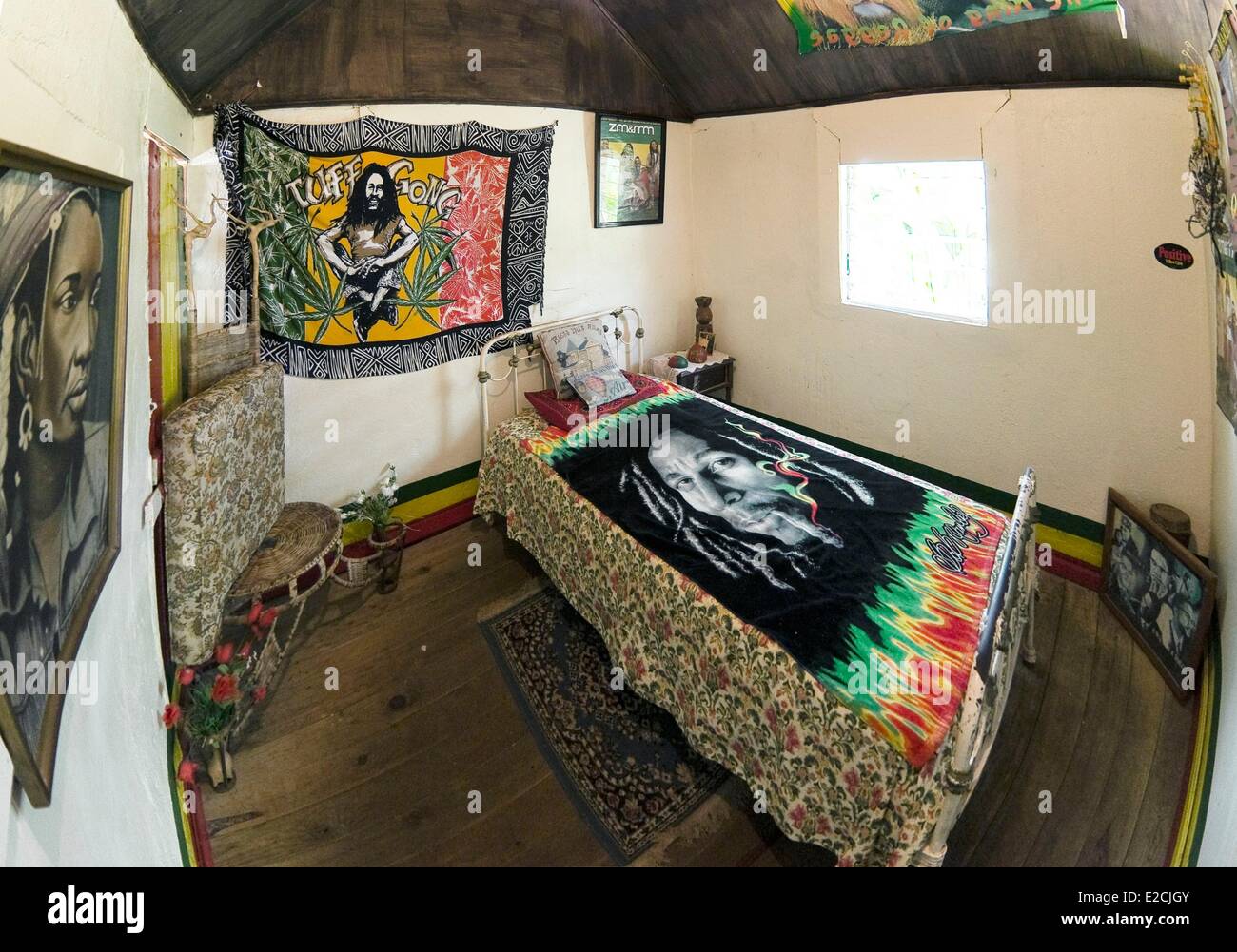
A guide leads visitors through the small home where the family lived, pointing out original furnishings and family history.
View personal artifacts, photographs, and memorabilia tied to the songwriter's early life and career.
Walk up to the hillside chapel and mausoleum to pay respects at the final resting place.
See the stone where the family gathered, framed by hillside views across Saint Ann Parish.
Browse the on-site gift shop and sample a Jamaican meal or drink before departure.
A small, still-furnished home where the reggae songwriter was born on February 6, 1945, and where his mother and her siblings were also born and raised. Original handmade decor from the mid-20th century remains on display inside.
A hillside chapel and burial site where the musician and family members are laid to rest, marking the endpoint of the guided walking route. It sits just uphill from the museum building and is treated as the tour's central stop.
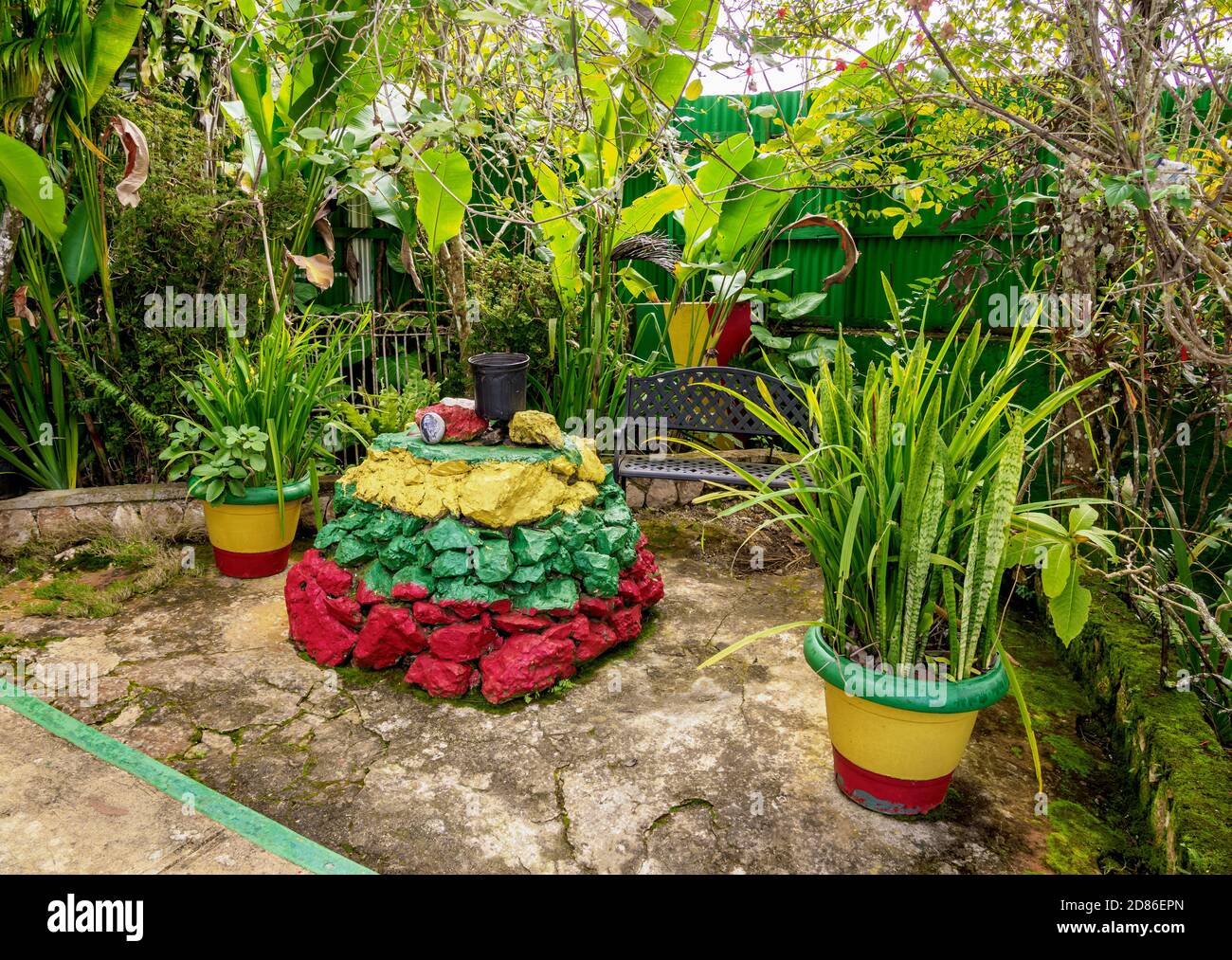
A large natural stone on the property where the family once gathered, offering an open view across the hills of Saint Ann Parish. Guides point to it as a site tied to the songwriter's early reflection and songwriting inspiration.
A dedicated room displaying personal artifacts, photographs, and memorabilia connected to the family's early life and musical career. Exhibits include handmade furnishings typical of 1940s rural Jamaica.
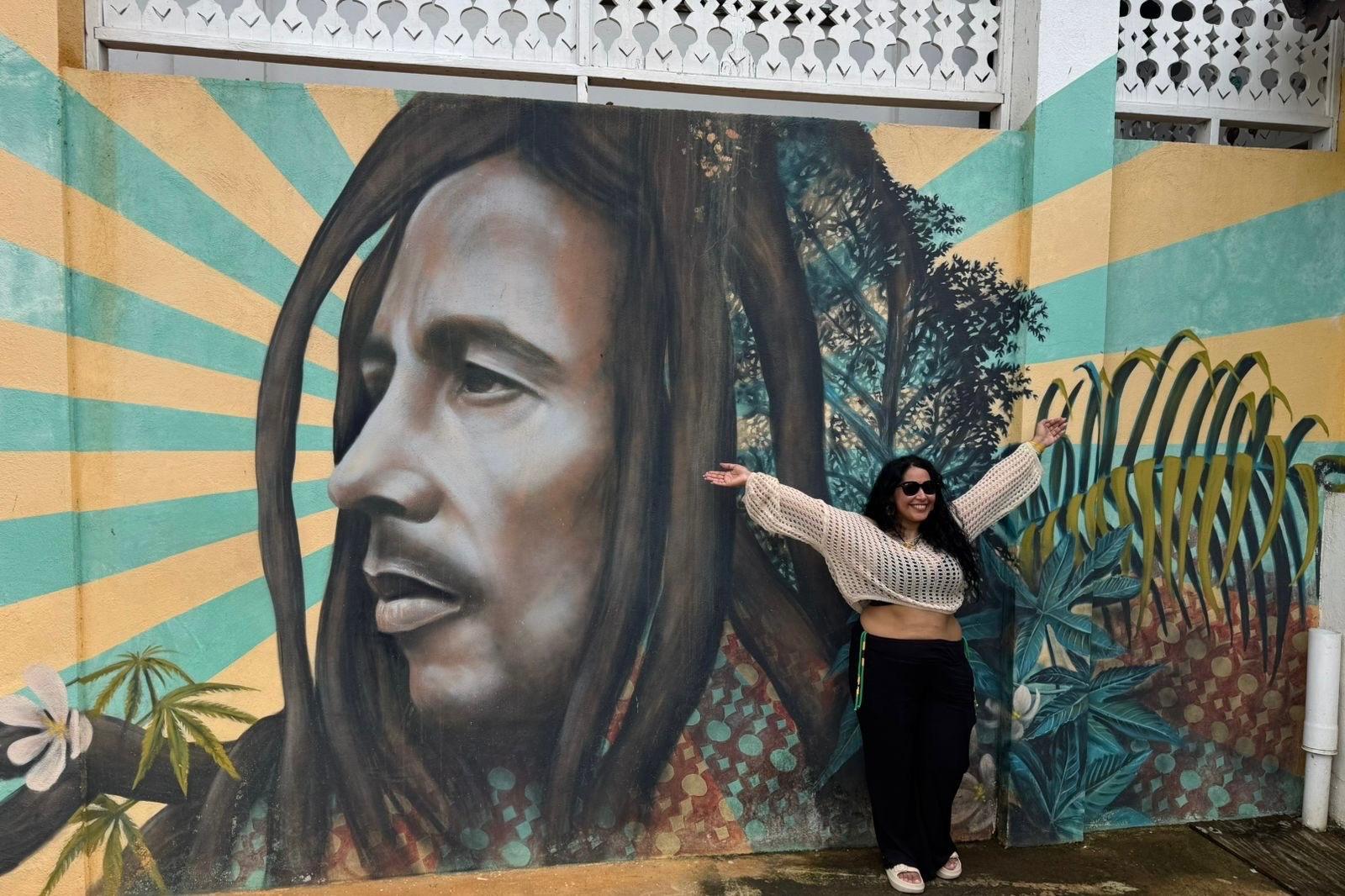
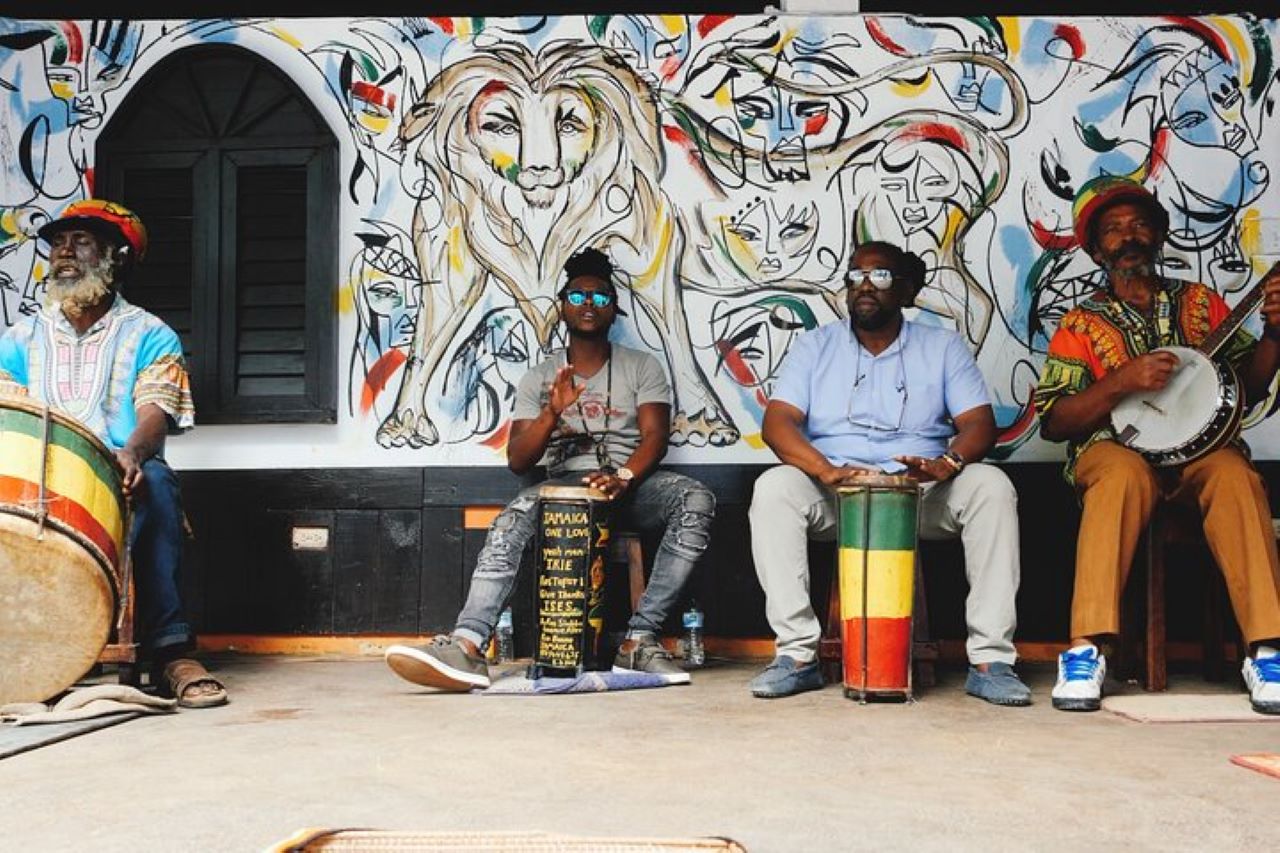
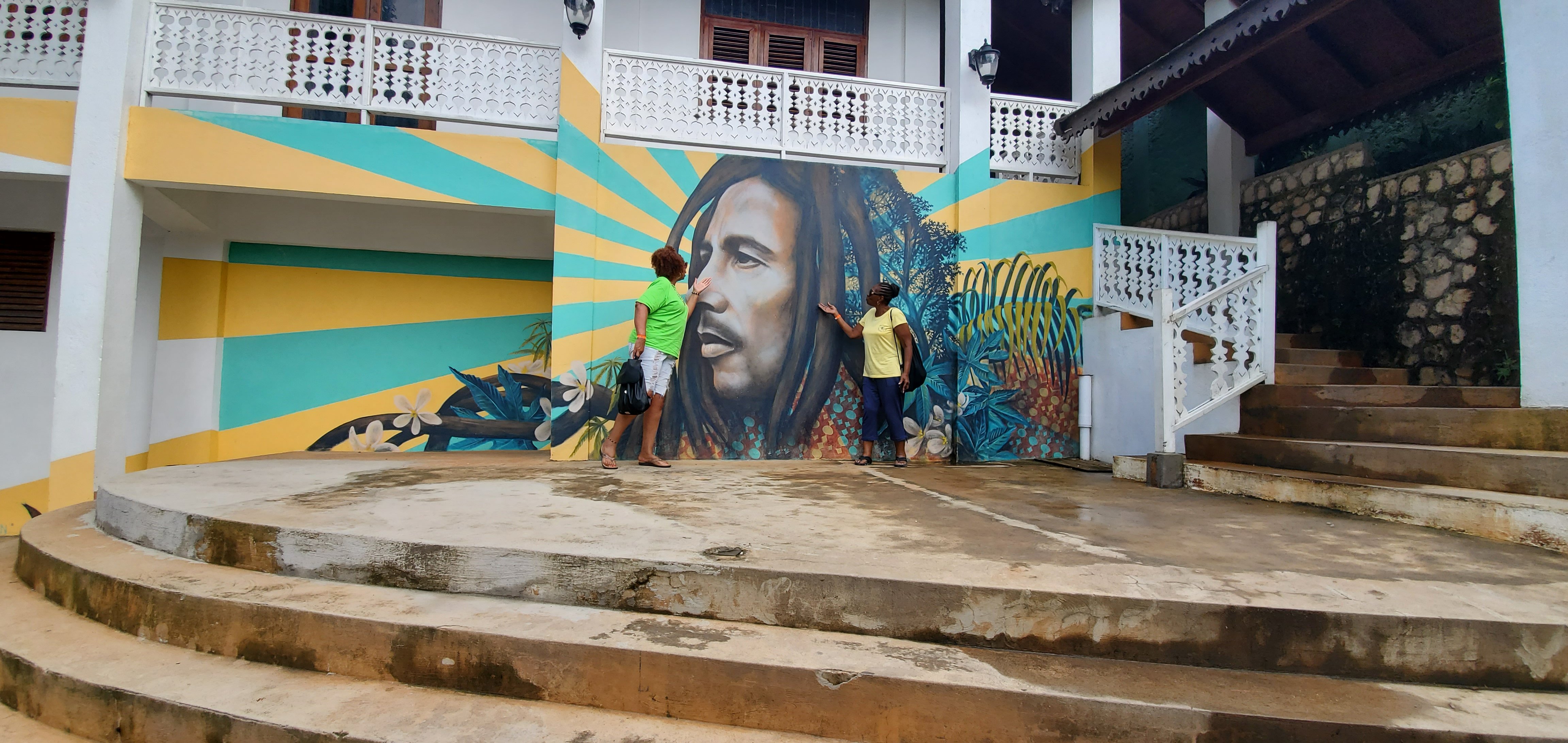
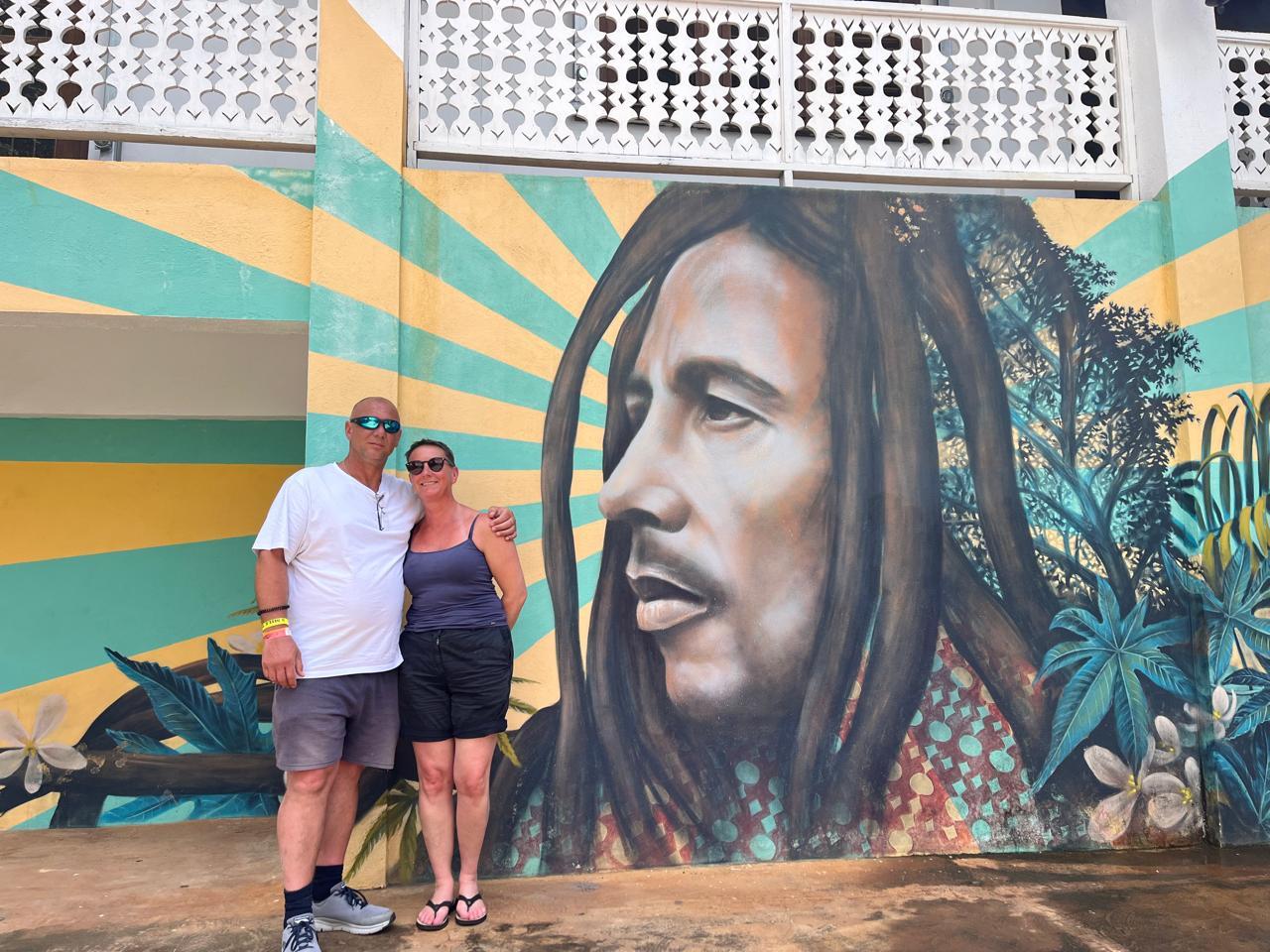
Hand-painted murals and artwork decorate several exterior walls across the property, added over the years by visiting artists and family members. The murals depict reggae imagery and Rastafarian symbolism in bright color palettes.
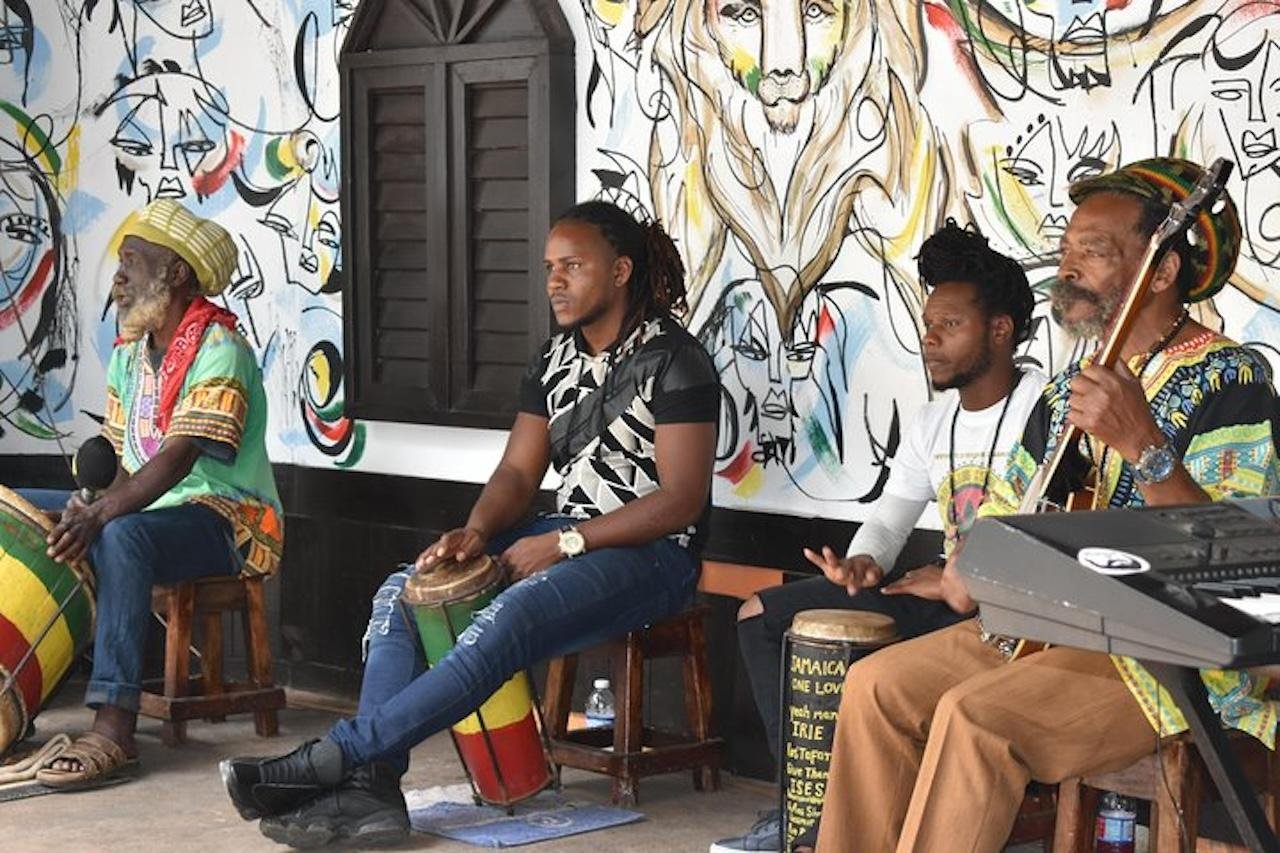
A gathering spot near the tour's end where a band often plays reggae music and visitors can order an authentic Jamaican meal after the walking tour concludes. It sits adjacent to the gift shop at the base of the hillside route.
You leave the coast road and climb inland, the route folding into the Dry Harbour Mountains until the tour buses thin and the banana groves close in. When you reach the gate at 9 Mile Reggae Land, a local guide — often a Marley relation — meets you and sets the pace. Arriving in the cooler 09:30–11:00 window, you find the courtyard quiet before the larger groups roll in. You step first into the small wooden house where Marley grew up, ducking through low doorways, and you pause at the single bed and the faded photographs. From there you cross the short courtyard to the marble mausoleum, where the singing sometimes starts without warning and you are handed a candle to carry inside. You climb a few dozen steps to Mount Zion Rock, the stone said to have served as his meditation pillow, and you sit where he sat while the guide traces the lyric back to the ground beneath you. The green-gold-red flags snap overhead. You linger for the drumming, buy fruit or a plate of local food near the gate, and trade a few words with people who knew the family. By the time you walk back down toward your ride, a nine mile jamaica tour has given you less a checklist than a rhythm — birthplace, resting place, hillside, song — all traced on foot within one enclosed compound.
All the details about your upcoming adventure in one place
Tucked into the green hills of St. Ann parish, nine mile jamaica is the birthplace and final resting place of reggae legend Bob Marley, where his childhood home and the Rastafari-decorated mausoleum still stand. Most nine mile jamaica tours wind through banana plantations and mountain roads guided by Rastafarian hosts who share the reggae heritage, the famed Mount Zion Rock, and the meaning behind the red-gold-and-green colors. It remains one of the most personal music-history pilgrimages among Jamaican landmarks.
Bob Marley was born in a two-room wooden house here on 6 February 1945, and he was laid to rest a stone's throw away in 1981. The two facts frame everything nine mile jamaica has become: a single hillside in the Dry Harbour Mountains that holds both the start and the end of one man's life. The village sits deep in Saint Ann Parish, roughly nine miles inland from the nearest coastal marker that gave it its name. It is remote by design of geography rather than intent — a winding upland route through banana groves and small farms, far from the resort strip of the northern shore. That distance is part of why the place matters. Marley returned to these hills for solitude and inspiration, and the landscape that shaped his early songs remains largely intact: red earth, scattered goats, the Rastafarian colours strung between fence posts. At the centre of the compound stands the mausoleum, a modest structure built after his death, alongside the childhood home preserved much as it was. Nearby lies the "Mount Zion Rock," the stone pillow referenced in "Talkin' Blues," where Marley is said to have rested and meditated. Guides raised in the district lead visitors through these landmarks, many of them Marley family relations, giving the reggae landmarks of the site an oral history rather than a curated one. What distinguishes this hillside from a conventional memorial is its living texture. The compound is not a sealed museum but a working village shrine, where devotional singing, the smell of cooking, and the green-gold-red of Rastafari overlap. The architecture is deliberately unornamented — whitewashed walls, marble tomb, a small chapel — reflecting Marley's own Ethiopian Orthodox faith adopted late in his life. The birthplace and the resting place face each other across a short courtyard, so a visitor traces a full arc in a few dozen steps. For Jamaica, this upland settlement functions as a place of pilgrimage that rivals any coastal attraction. It draws devotees, musicians, and travellers who treat the visit as homage rather than sightseeing. Nine mile jamaica endures precisely because it refuses to smooth itself into spectacle; the roads stay rough, the hills stay green, and the story stays local. A well-planned nine mile jamaica tour reveals not a monument frozen in bronze but a community that has kept a life, and a music, close to the ground where both began.
The birthplace and the resting place face each other across a short courtyard, so a visitor traces a full arc in a few dozen steps.
Casual, breathable clothing suits the hillside climate at Nine Mile Jamaica, and closed-toe shoes help on the uneven stone paths around the mausoleum and chapel. There is no strict dress code, but modest coverage is appreciated near the family chapel and burial site.
A security guard is posted at the compound's walled gate and can assist if the entrance isn't immediately open. Small daypacks and cross-body bags are fine to carry through the tour route; there is no formal bag-screening checkpoint, but staff may do a visual check at the gate.
Personal photography and video are allowed throughout the grounds, including the birthplace house and mausoleum chapel, though guides may ask visitors to pause filming during the reflective moment inside the mausoleum itself. Tripods and commercial camera rigs should be cleared with staff in advance.
Children aged 5 and under typically enter free, with reduced pricing often available for children 11 and under through booked tours. The hillside paths and steps mean young children should be supervised closely.
The property sits on a sloped hillside with stone steps between the house, museum, and mausoleum, which can be difficult for wheelchair users or those with limited mobility. Transportation to the site is listed as wheelchair accessible, and staff can offer guidance at the gate, but the interior walking route is not fully level.
Outside food and drink are not part of the standard tour route, which focuses on the house, museum, and mausoleum before ending near the on-site restaurant and bar area. Bottled water is recommended given the exposed hillside walk between buildings.
Steady mid-week flow
Cruise-day buses arrive midday
Busiest day of the week
Quieter, family visitors
Opening hours
09:30–17:00 daily
Address
9 Mile Reggae Land, Nine Mile, Saint Ann Parish, Jamaica
Access
Hillside compound, security guard at gate, service animals allowed
Climate
Warm hill-country sun, light rain possible, bring a hat
Entrance fee
30 USD per adult, foreign visitor gate admission
Car · About 45 min–1.5 hr depending on route · Fuel plus informal roadside parking assistance, 5–9 USD in tolls/fees
Self-drive from Ocho Rios follows a winding, pothole-prone mountain road into the hills of Saint Ann Parish; a durable rental vehicle is recommended.
Taxi · About 45 min–1 hr from Ocho Rios · Fare typically negotiated, roughly 5–9 USD equivalent per mile plus wait time
Licensed taxis from Ocho Rios or St. Ann's Bay can be hired directly to the compound gate, avoiding the need to navigate the winding road yourself.
Tour shuttle · 4.5–7 hours round trip depending on departure city · Tour price varies by operator, often separate from the 30 USD gate fee
Most visitors arrive via organized tours departing Ocho Rios, Montego Bay, Falmouth, or Negril with hotel pickup included.
Gate admission of 30 USD per adult is paid on arrival and is generally non-refundable once the tour begins; pre-booked third-party tours to Nine Mile Jamaica typically allow free cancellation up to 24 hours before pickup, but policies vary by operator, so check the confirmation voucher.
Weather · crowds · average price — dots go green to amber to red as each metric rises.
Coolest, driest months in Saint Ann Parish with the least chance of rain interrupting the hillside walk between buildings.
Warm and humid with occasional afternoon showers; mornings between 09:30 and 11:00 stay cooler before cruise-ship tour groups reach the hills.
Heavier rain and storm risk can affect the winding mountain road; check forecasts before a long drive up from the coast.
Higher visitor numbers as cruise and resort traffic increases; expect fuller parking at the compound.
The best arrival window is 09:30–11:00, when the hillside compound is cooler and tour buses haven't yet arrived in numbers.
The 30 USD adult gate fee is easiest to pay in small USD bills at the ticket window near the entrance gate.
The drive up from the coast runs along a narrow, winding mountain road with potholes, so a sturdy vehicle or a guided shuttle is worth choosing over a compact rental car.
Free parking exists inside the walled Foundation compound, but visitors may need to knock at the gate; avoid informal roadside parking touts on the hill outside.
The guided walk through the house, museum, and mausoleum runs roughly 1 hour to 1 hour 20 minutes, so budget a half-day once travel time from the coast is included.
The final guided tour of the day typically starts at 4:30pm, well before the 17:00 closing time, so plan arrival accordingly.
Some day tours combine Nine Mile Jamaica with a stop at Dunn's River Falls near Ocho Rios, which can extend a half-day trip into a full-day itinerary.
9 Mile Reggae Land, Nine Mile, Saint Ann Parish, Jamaica
Enter the walled Foundation compound, park, then proceed upstairs to the ticket gate
Get directionsOcho Rios, Saint Ann Parish, Jamaica
Common shuttle/tour pickup location for guided day trips to Nine Mile
Get directionsRobert Nesta Marley was born on 6 February 1945 in the hill village of Nine Mile, Saint Ann Parish. His mother, Cedella Booker, was a local teenager; his father, Norval Marley, was an older white overseer largely absent from the boy's life. Cedella raised him among the red-earth slopes and small farm plots that define this corner of nine mile jamaica. The child slept in a modest wooden dwelling, and the rough stone he is said to have rested his head upon — the rock pillow — later took on spiritual weight for pilgrims. Marley left for Trench Town in Kingston as a teenager, yet the village remained his reference point. From the mid-1960s he built The Wailers with Peter Tosh and Bunny Wailer, and by the mid-1970s reggae carried his name across continents. His embrace of Rastafarian faith shaped the mythology that visitors on nine mile jamaica tours now trace back to these hills. When Marley died of melanoma on 11 May 1981, aged 36, his body returned home. A mausoleum was raised on the family land, and his remains were interred with a guitar and other possessions. Today the site functions as both grave and shrine. His mother Cedella Booker, who died in 2008, rests nearby, and his half-brother Anthony Booker was interred alongside him. For Rastafarians the ground holds the standing of a sacred landmark, and a nine mile jamaica tour reads less as sightseeing than as devotion. Guides recount the childhood dates, the family lineage, and the meaning of the rock pillow to those arriving with nine mile jamaica tickets in hand. The transformation from farming hamlet to reggae pilgrimage was gradual, driven by the Marley family and steady streams of admirers. What survives is deliberately unpolished: the birth house, the meditation stone, the two-domed mausoleum. The Saint Ann countryside frames it all. Among Jamaica's cultural landmarks, few carry this density of biography, and the Nine Mile heritage site anchors that memory in a single hillside.
Robert Nesta Marley is born in Nine Mile on 6 February to Cedella Booker.
As a boy he sleeps in the family's wooden house beside the stone later called the rock pillow.
Marley leaves for Trench Town and forms The Wailers with Peter Tosh and Bunny Wailer.
Reggae and his Rastafarian faith carry the Nine Mile name to a global audience.
Marley dies of melanoma on 11 May, aged 36, and is interred in a mausoleum on the family land.
His mother Cedella Booker dies and is laid to rest near her son at the site.
The hillside endures as a working pilgrimage and mausoleum, its birth house and stone preserved.
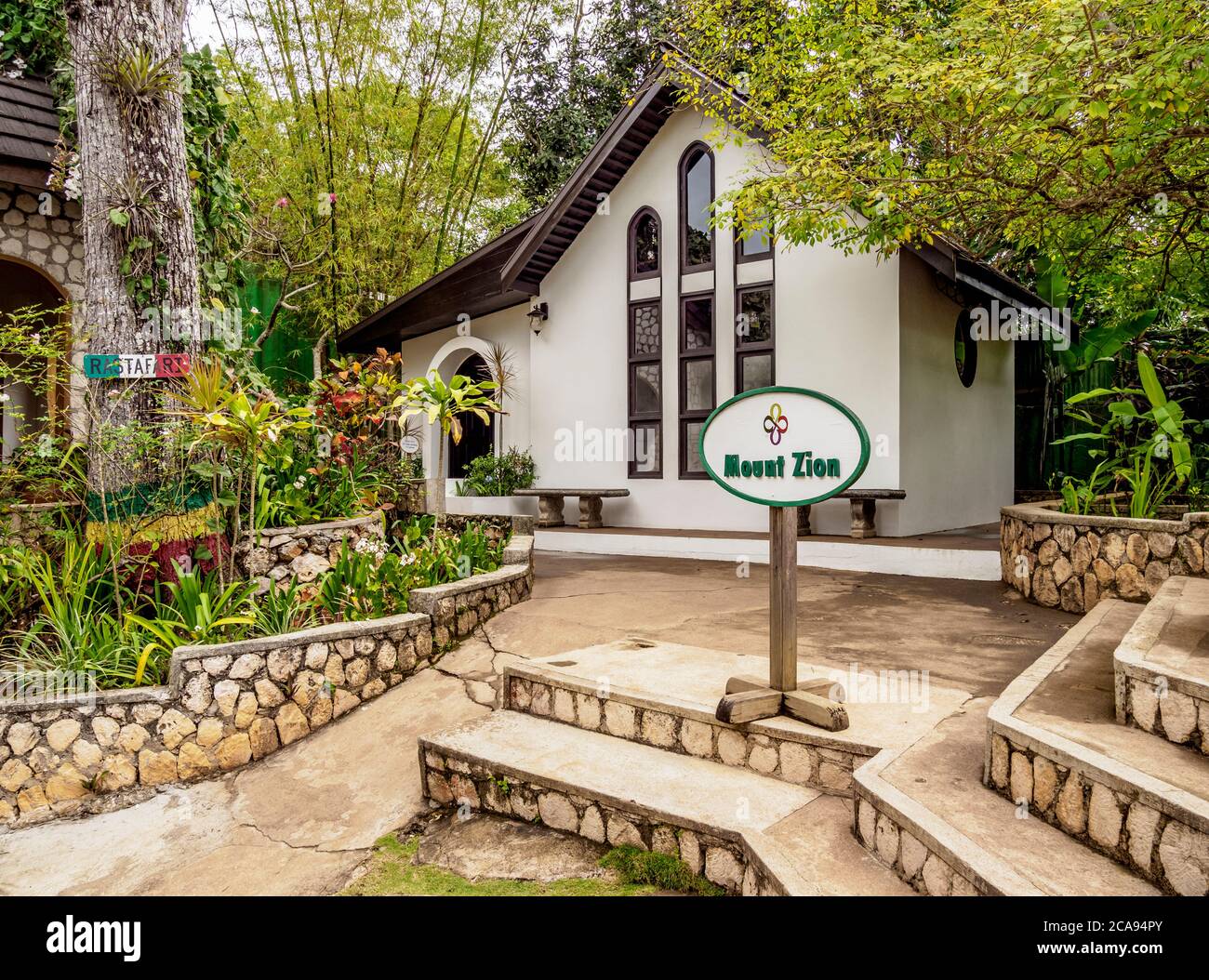
The white chapel of traditional Ethiopian design sits on the hilltop and is the most photographed structure on the property; stand at the courtyard entrance to frame the whole facade with the surrounding hills behind it. Interior photography of the tomb itself is restricted, so this exterior angle is the shot most visitors come away with.
The small red-yellow-green painted stone where Marley reportedly rested his head sits just outside the childhood cottage. Guides often invite guests to pose leaning against it, and the tight courtyard framing makes it a compact, detail-oriented shot rather than a wide one.
The tiny original bedroom, its walls covered in handwritten fan messages, offers an intimate interior shot; visitors are sometimes allowed to sit on the bed for a portrait. Space is narrow, so a single subject works better than a group.
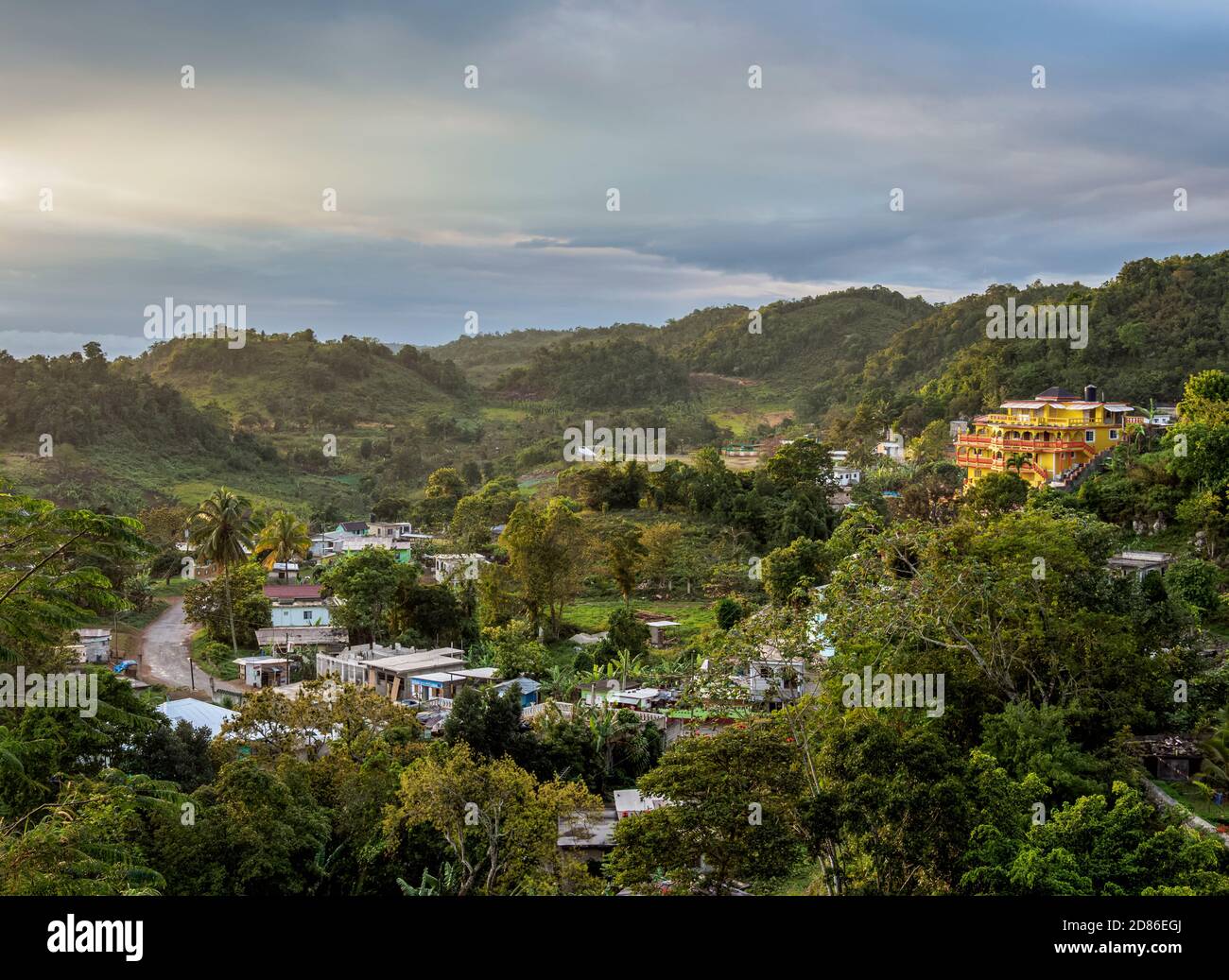
From the raised grounds near the mausoleum, the hills of St. Ann Parish roll out toward the coast, a classic wide shot that any nine mile jamaica visit includes for its sense of place. Stand near the upper terrace path for the clearest sightline over the valley.
The gate and painted signage mark the start of the walking route through the grounds and is a common first and last photo of the visit, with the surrounding greenery framing the entrance. Wide shots work best a few steps back from the gate itself.
Visiting nine mile jamaica with a family means a long, winding mountain drive followed by a guided walking tour over hilly, uneven ground, so it works best with kids who can handle both. Toddlers can nap through the ride, but older kids get more out of the live music and the stories woven into the nine mile jamaica tour.
The site is stroller-friendly though not wheelchair accessible, so a lightweight stroller handles the paths better than a bulky travel system. Expect a guide or driver to help lift it over rougher patches near the mausoleum steps.
School-age kids and teens engage most, since guides lean on storytelling, artifacts, and live acoustic renditions of Marley songs that hold younger attention better than static exhibits. Toddlers tend to tire quickly on the uneven, hilly terrain and may need to be carried for parts of the walk.
The road up into the St. Ann hills has sharp curves for roughly two hours each way, so pack motion sickness remedies and snacks, and seat prone kids by a window with airflow. Breaking up the drive with a stop lowers the chance of a rough patch right before the tour starts.
Build in slow time: guides move the group between the childhood home, artifacts, and the grave site at a walking pace, so toddlers can rest on a hip while older kids explore each stop. A 9:30 to 11:00 arrival keeps the paths cooler and less crowded, easing the walk with little ones.
Restrooms are on site, but dedicated baby-changing stations are not confirmed, so bring a portable mat for infants. Infant seating is available on tour vehicles, though car seats for toddlers are not typically supplied.
Eating near nine mile jamaica is simple, since the attraction itself runs a restaurant on site and most organized tours pair the visit with a jerk lunch on the drive back toward Ocho Rios.
Jerk chicken, curry goat, rice and peas, and vegetarian plates served after the mausoleum tour. Order counter-style and expect a wait once a tour bus unloads, so an early visit keeps the line short.
Rum drinks, Red Stripe, and fresh juices poured next to the restaurant seating area. Good for a shaded break between the museum and the burial site, though it fills up around midday.
An open-air pit-cooked jerk spot many nine mile jamaica tours add on the ride back, known for smoky jerk chicken and pork served on wooden boards. Best ordered right off the grill rather than from trays that have been sitting.
Real experiences from real travelers
The drive up through the Saint Ann mountains was half the experience, all switchbacks and roadside fruit stands. Standing at the actual mausoleum where Bob Marley rests felt quieter and more moving than I expected. Book one of the nine mile jamaica tours with a proper guide because the stories make the whole place come alive.
Our guide sang and drummed the entire walk through the compound, which set the mood perfectly. Sitting on the Mount Zion Rock where he wrote and rested was a real highlight. The hilltop views over the green interior stretched for miles under a hazy afternoon sky.
I came up from Ocho Rios and the mountain air was cool and fragrant with ganja and wild flowers. The painted childhood house and the marble tomb are simple but full of meaning. A nine mile jamaica tour is the easiest way to reach this remote village without renting a car.
The road is long and rough in places so go in early morning before the heat builds. The guides at the birthplace compound were warm and knowledgeable about Marley's early years. Bring cash for the small craft vendors near the entrance.
Visiting the hilltop where reggae's founding voice grew up felt like a pilgrimage for me. The single window in the mausoleum faces the sunrise, which our guide explained beautifully. If you love the music, the nine mile jamaica tour is unmissable for the sheer sense of place.
We wound up into the mountains as clouds rolled over the ridges, and the whole village felt suspended in time. The mausoleum and the small chapel were modest yet powerful. Grab your nine mile jamaica tickets in advance since the site can get busy midday.
The energy at Bob Marley's birthplace was calm and joyful, with reggae drifting from every corner. Our guide pointed out the ackee trees and the rock where he meditated. Sensational hilltop panoramas over the Jamaican landmarks in the distance.
It is a genuine trek from the coast, roughly two hours of mountain road, so be ready. Once you arrive the hilltop compound is serene and the guides treat it with real reverence. The painted house and gardens were smaller than photos suggest but felt authentic.
Reaching this mountain village felt like stepping into the soul of reggae history. The mausoleum window catching the low sun stayed with me. A guided nine mile jamaica tour handled all the winding roads so we could just soak in the hills.
The setting high in the Saint Ann hills is lovely and the story is genuinely touching. We arrived around noon when several tour buses did too, so it felt packed for a while. Go early and the mountain calm returns.
Everything you need to know for your journey
Nine Mile Jamaica is open daily from 09:30 to 17:00, seven days a week.
Gate admission to Nine Mile Jamaica is 30 USD per adult for foreign visitors, payable at the entrance.
The final guided tour of the day begins at 4:30pm, ahead of the 17:00 closing time, so plan to arrive with enough time to complete the roughly hour-long walk.
The compound sits on a sloped hillside with steps between buildings, which can be challenging for wheelchair users, though transportation to the site is listed as wheelchair accessible and staff can assist at the gate.
Weapons, illegal drugs other than what's offered on-site, drones without approval, glass containers, and oversized luggage are among the items not permitted on the grounds.
Personal photography is allowed throughout most of the Nine Mile Jamaica tour route, including the birthplace house and mausoleum, though guides may ask for a quiet moment during the visit to the resting place itself.
Arriving in the 09:30–11:00 window offers cooler hours and smaller crowds before tour buses reach the hills; weekday mornings are generally quieter than Saturdays.
There's no strict dress code, but modest, casual clothing and closed-toe shoes are recommended given the stone paths and the family chapel on site.
Food and drink aren't part of the standard tour route, which ends near the on-site restaurant and bar where a Jamaican meal can be purchased.
Nine Mile Jamaica sits roughly 45 minutes to 1.5 hours by car or taxi from Ocho Rios along a winding mountain road, and most visitors book a shuttle or guided tour rather than self-driving.
Yes, families are welcome; children aged 5 and under typically enter free, with reduced admission often available for children 11 and under.
Gate admission is generally non-refundable once a tour begins, though many pre-booked third-party tours to Nine Mile Jamaica allow free cancellation up to 24 hours before pickup.
Nearby stops include Mount Zion Rock on the property itself, the market town of Brown's Town about 20 minutes away, and Cranbrook Flower Forest roughly 30 minutes down the hill.
A large stone on the property where the Marley family gathered, offering hillside views over Saint Ann Parish.
A market town a few miles north of Nine Mile with local produce stalls and everyday Jamaican street life.
A working farm and studio associated with the Marley family in the surrounding hills.
A botanical garden and river park in Saint Ann Parish with walking trails and a bamboo-lined river.
An all-inclusive beachfront resort in Ocho Rios often used as a base for day trips into the hills.
A quiet, classic beachfront property near Ocho Rios favored for its low-key atmosphere.
A large all-inclusive complex on the Runaway Bay coastline within day-trip distance of the hills.
The main coastal town near Nine Mile Jamaica with a wide range of resort and guesthouse options.
Join thousands of happy travelers who have discovered this incredible experience
Book Your Experience Now